2026 Events
How can an ancient mind-body practice improve health, wellbeing, and resilience in modern life? In this Thought Leadership event, Dr Guoyan (Emily) Yang and Associate Professor Janet Conti explore the growing evidence behind Tai Chi and its real-world impact on physical health, mental wellbeing, healthy ageing, and stress reduction. Discover how research and practice come together to support healthier, more resilient individuals and communities, aligned with the UN Sustainable Development Goals.
https://www.youtube.com/embed/YMf0mgk1Uq4?si=HkEECzcwdP2j8ll8
In this thought-provoking presentation, Dr Jennifer E. Cheng examines how school uniform policies shape and regulate gender expression, identity, and belonging. Drawing on research into education, gender, and social norms, she explores the ways uniforms act as more than clothing, influencing how students perform and negotiate gender within institutional settings. The discussion challenges assumptions about choice, equality, and inclusion, offering valuable insights into the complex relationship between education, identity, and social justice.
Related SDGs: SDG 4 (Quality Education), SDG 5 (Gender Equality), and SDG 10 (Reduced Inequalities).
https://www.youtube.com/embed/8HWtxIYOwYM?si=lU3tdO-o4mWXtp_A
Explore how research, innovation, and industry collaboration are transforming food waste into valuable products with real-world environmental, social, and economic benefits. In this Thought Leadership event, Associate Professor Dharma Hagare and Mr Norm Boyle discuss the pathway from research to commercialisation, advancing SDG 12 Responsible Consumption and Production, SDG 13 Climate Action, SDG 9 Industry, Innovation and Infrastructure, and SDG 17 Partnerships for the Goals.
https://www.youtube.com/embed/HQRE16lFO44?si=CGGt2D_PX7iyQ-n7
Western Sydney University Library's Thought Leadership Series is proud to present Sunburnt Country: Managing Australian Landscapes for Production, Climate and Nature Goals.
This timely discussion highlights how interdisciplinary research is helping to address climate change, biodiversity loss and sustainable land management, while contributing to the United Nations Sustainable Development Goals. Featuring Professors Ben Smith, Rachael Gallagher and Uffe Nielsen from the Hawkesbury Institute for the Environment.
https://www.youtube.com/embed/mDkf07UGUdY?si=6qnPRE6Czmb9ONZ4
As part of the Western Sydney University Library’s Thought Leadership Event Series, the April 2026 workshops Building Belonging: A Community-Based Consultation on Social Cohesion in Western Sydney brought together community organisations, government representatives, and local leaders to inform policy development through community expertise and lived experience. Discussions explored barriers to inclusion, participation, and belonging, while identifying practical, community-led solutions to strengthen social cohesion across Western Sydney.
This policy brief, authored by Dr Valentina Baú (Humanitarian and Development Research Initiative, Western Sydney University), translates these insights into eight key policy recommendations, including long-term support for community-led engagement, greater investment in cultural and community organisations, improved transport accessibility, strengthened anti-racism initiatives, language and digital literacy programs, culturally responsive mental health services, place-based community service hubs, and settlement policies that promote intercultural connection and belonging. The policy brief is available at https://www.westernsydney.edu.au/hadri/shared-media/social-cohesion-western-sydney.pdf
As part of Western Sydney University's Thought Leadership Event Series, this event explores Co2Concrete, an innovative technology that transforms construction and demolition waste into high-performance, low-carbon concrete while permanently storing carbon dioxide. The session highlights how research, industry, and infrastructure partners are working together to create sustainable construction solutions that support a circular economy and accelerate the transition to net-zero emissions.
Hear from Distinguished Professor Vivian W. Y. Tam, an internationally recognised leader in sustainable construction and recycled concrete research; Lourdes Sanchez, Holcim Australia's National Technical Manager, Aggregates, and a specialist in low-carbon concrete solutions; and Saji Srivelan, Sustainability Manager for Parramatta Light Rail Stage 2, who brings extensive experience delivering sustainability outcomes across major infrastructure projects. Together, they will share insights into the research, innovation, and real-world applications driving the future of sustainable construction.
https://www.youtube.com/embed/vZ5jiB2p_gM?si=PSdJzQo5xDi7LR0X
This Thought Leadership Event Series brings together research, practice, and lived experience to explore how financial literacy can support individual wellbeing and contribute to reducing social and economic inequalities. The recorded workshops below offer practical guidance and reflective insights designed to empower individuals and communities through improved financial capability.
https://www.youtube.com/embed/ZnE1BaHG7SY?si=vpO9rMiVuOzPcb-J
This workshop introduces the core principles of budgeting, supporting participants to better understand their income and expenses and take control of their finances. Through simple tools and practical strategies, the session builds confidence in creating and maintaining a budget that supports everyday needs while laying the foundation for future financial goals.
https://www.youtube.com/embed/LgTOzH0Wb1c?si=VGxexZh3ifONJh5C
Focusing on financial wellbeing, this workshop guides participants through a structured review of their financial situation, including income, expenses, debts, and savings. Using reflective prompts and practical tools, the session helps identify strengths, uncover gaps, and clarify next steps toward a more secure and balanced financial future.
https://www.youtube.com/embed/Ytl_EPlBy8s?si=WhA6X-zvObmN_YgN
This workshop invites participants to reflect on their values, goals, and aspirations to develop a clear and meaningful financial vision. By connecting personal priorities with long‑term financial wellbeing, the session supports more confident, intentional, and values‑driven financial decision‑making.
https://www.youtube.com/embed/sAhbEo902C0?si=AeRProHjkS74CeCU
2025 Events
The 2026 workshop series builds on the Thought Leadership presentation delivered in 2025 by Associate Professor Michelle Cull, which examined the critical role of financial literacy in addressing social and economic inequality.
In this presentation, Associate Professor Cull explored how access to financial knowledge and skills can empower individuals and communities, strengthen financial wellbeing, and support more inclusive economic participation. Drawing on research evidence and real‑world examples, the session highlighted the importance of education, policy, and community‑based approaches in reducing financial disadvantage and advancing equity.
Insights from this presentation informed the development of the 2026 workshop series, translating research‑led perspectives into practical, accessible learning opportunities focused on budgeting, financial wellbeing, and long‑term financial planning.
https://www.youtube.com/embed/ZnE1BaHG7SY?si=vpO9rMiVuOzPcb-J
This Thought Leadership session explores how Western Sydney University Library is advancing community engagement, innovation, and collaborative learning. In this presentation, speakers share insights into emerging library initiatives, the evolving role of academic libraries, and the ways in which strategic partnerships are shaping the future of research support and student success. This recording captures key ideas and practical approaches designed to inspire forward-thinking practice across the sector.
https://www.youtube.com/embed/VOfNKjVdjZk?si=_keyxgLdyGR3sP7j
Nina Gbor, founder of Eco Styles and a sustainable fashion educator and campaigner—delivers a compelling keynote on the local–global politics of clothing, waste, and stewardship. Drawing on circularity in fashion and textiles, she explores how share-and-reuse practices can underpin community transformation and contribute to systems change for environmental and social justice. The keynote is facilitated by Alison Gill. This recording forms part of the Library’s Thought Leadership Events program, showcasing research and conversations aligned with the United Nations Sustainable Development Goals (SDGs).
https://www.youtube.com/embed/ShZPOZvjkIA?si=PBiuOlcsMb97GIos
Dr Diana Jefferies, Senior Lecturer in the School of Nursing and Midwifery, discusses how autobiography offers a powerful lens for understanding how women make meaning of postpartum mental distress, their access to healthcare, and their responses to treatment. Using three published autobiographical accounts—including The Book of Margery Kempe, A Mother’s Mind, and Because I’m Not Myself—she considers how first-person narratives can be interpreted alongside current clinical guidelines to reveal gaps in services and improve care. This recording is part of the Library’s Thought Leadership Events program, which highlights Western Sydney University research and public conversations aligned with the United Nations Sustainable Development Goals (SDGs).
https://www.youtube.com/embed/Yjwr0VSoxgM?si=tXXVtN0Bdy0Qdv9G
In this Thought Leadership Event recording, Associate Professor David R. Cole discusses the inspiration and creative process behind his climate-fiction novel A Storybook of Culling.
Set in the year 2095, the story unfolds in the Persianised city of Sal’lad, where escalating climate impacts frame a collision of intertwined narratives: an academic drawn into a dangerous relationship, and a clandestine society advancing a secret “solution” to the planet’s crises. Cole’s talk introduces the novel’s central tensions such as love, catastrophe, and the unsettling logic used to justify unthinkable acts inviting audiences to reflect on ethics, power, and survival in the Anthropocene.
David R. Cole is an Associate Professor in Education and Cultural Analysis at Western Sydney University, with an international lived experience and a strong commitment to creativity and imaginative thought as vital to humanity’s future.
https://www.youtube.com/embed/7YvGy2nAWak?si=LzDxU9ey3qe9SA-t
In today's digital world, young children are increasingly engaging with multimodal texts that extend beyond traditional print. Augmented Reality (AR) serves as a powerful tool to bridge informal digital practices with formal literacy learning. It creates multisensorial and interactive experiences that enhance language and literacy development. This event explores the potential of AR for scaffolding storytelling, developing oracy, and fostering critical and creative thinking and writing. It highlights strategies for harnessing the educational benefits of AR to transform language and literacy experiences for young children, making learning more engaging for them.
About the speaker:
Associate Professor Lynde Tan is a multi-award-winning educator and researcher in digital literacies, language education, and multimodal literacies at Western Sydney University. Her work explores the integration of emerging technologies into educational practices. Her international standing is evidenced by her highly-quality and widely-cited publications. With her growing reputation in and beyond Australia, Lynde has been invited as a keynote speaker in various local and international conferences.
https://www.youtube.com/embed/_iNSx7nV9EM?si=8rWFf9vewjy8RyC5
Dr Selda Dagistanli researches "cultures of abuse" and the racialisation of gendered violence, multicultural politics, racism, cultural diversity and the law through a critical analysis of legal and political discourses. Her research focus is an exploration of the ways in which minorities are morally, politically and culturally marginalised in legal, institutional, and broader community arenas.
Dr Dagistanli engages with the intersectional suffering of women of colour whose experiences are tied together by a common thread; the racial and epistemic injuries sustained through institutional responses which compound the gender violence already endured. In the spectrum from silence and erasure to culturally inapt standards of wellbeing and self-care, Dr Dagistanli explores how responses to violence against women of colour can be morally and ethically lacking. Tracing the common thread of insult and injury through gender violence cases within diaspora communities in Australia, to the violence suffered by women in war zones abroad, institutions need to aspire to standards that move beyond the well-trodden path of 'white benevolence', towards listening, hearing and foregrounding the voices of women in those cultural communities.
https://www.youtube.com/embed/XVXdVpARr1s?si=jDBPg3vl9DKGL4ZJ
Australia has a significant number of immigrants from the Pacific Islands. According to the 2016 census, 75,755 people are of Samoan heritage and more than 40% of them live in New South Wales. Samoans have an inherited predisposition to diabetes, but prior to the Western study, there was little research on the effectiveness of public health interventions to reduce the health risks of diabetes in this immigrant group.
Professor Freya MacMillan and Distinguished Professor David Simmons' team developed a program called Le Taeao Afua (the new dawn) derived from evidence-based research on community interventions and tailored by participants themselves to fit the Australian-Samoan lifestyle. The University worked with Samoan community activator, Afioga Salā Ronda Thompson who turn trained 20 volunteers to become peer support facilitators. After 3-8 months, the participants had statistically significant reductions in HbA1c levels, average blood sugar for the past two to three months, a significant health improvement outcome.
At this event, Professor MacMillan and Afioga Salā Ronda Thompson discussed the research, community engagement and co-creation that led to the success of the NHMRC-funded Pasifika Preventing Diabetes Program (PPDP).
https://www.youtube.com/embed/qv1mK2ltgN4?si=Cd3vclPzZvz-W4Ch
2025 edition by Western Open Books
This inaugural edition of Sustainable Development Without Borders captures the rich insights and expertise shared across 17 Thought Leadership Events held between November 2022 and November 2023.
This activity is aligned with SDG 2-Zero Hunger, SDG 4-Good Health and Well-Being, SDG 5-Gender Equality, SDG 6-Clean Water and Sanitation, SDG 7-Affordable and Clean Energy, SDG 8-Decent Work and Economic Growth, SDG 9-Industry, Innovation and Infrastructure, SDG 10-Reduced Inequalities, SDG 11-Sustainable Cities and Communities, SDG 12-Responsible Consumption and Production, SDG 13-Climate Action, SDG 14-Life Below Water, SDG 15-Life On Land, SDG 16-Peace, Justice and Strong Institutions, and SDG 17-Partnerships for the Goals.
https://www.youtube.com/embed/9z-v4ZsJHzU?si=4Cdn4TRxTA89OX3n
Menstrual and gynaecological health conditions, such as period pain, are incredibly common, affecting around 9 in 10 under the age of 25, while endometriosis is about as common as diabetes, and most women will experience perimenopausal symptoms. Despite this there has been limited research and support for women, girls, and those who menstruate, leading to significant impacts at school, higher education and work. This event will explore how these conditions impact people across the lifespan and what can be done to help reduce these impacts to help ensure gender equity across many the different spheres of life.
About the presenters:
Associate Professor Mike Armour is an Associate Professor in Reproductive Health, at NICM Health Research Institute, Western Sydney University. His work focuses on endometriosis, chronic pelvic pain, period pain and menstrual health. He has published over 120 papers on women's and reproductive health and is currently running several clinical studies on endometriosis, period pain (dysmenorrhea) and menopause. He is the chair of the Australasian Interdisciplinary Researchers in Endometriosis (AIRE), academic co-lead of the Menstrual Cycle Research Network at Western, and a World Endometriosis Society ambassador.
Professor Tania Ferfolja is Professor in Social and Cultural Diversity in the School of Education/Centre for Educational Research at Western Sydney University. Her work focuses on equity in education particularly in relation to gender and sexuality diversities in curricula, policy, pedagogy, education and employment practices in Australia and internationally. Tania is also a member of an award-winning interdisciplinary research team examining the experiences and support needs of young people who menstruate in school education. Her teaching complements her research, focusing on the areas of in/equity, discrimination, social justice and critical social and cultural inclusion in education. She has been the recipient of numerous awards for her research and teaching throughout her career.
Dr Michelle O'Shea is a Senior Lecturer and interdisciplinary gender equity scholar in the School of Business at Western Sydney University. Through her research and advocacy, Dr O'Shea is committed to understanding and redressing gender and intersectional inequities in work, education, and health/sport institutional contexts.
https://www.youtube.com/embed/LfJ-HdHwnOM?si=H-rZEg_iIgVmcthl
Watch the replay of Western Sydney University Library's 29th Public Thought Leadership Event, Mapping the Landscape of Optometric Education in Sub-Saharan Africa. Led by Dr Uchechukwu Levi Osuagwu, this global forum spotlighted a landmark study across 12 African nations and the UK, revealing key trends, challenges, and opportunities in optometry education.
Key themes included:
- Africanisation of education and culturally relevant curricula
- Sustainability and partnerships in eye health training
- Technology and hybrid learning as tools for equity
- Policy reform and harmonised regulation
With multilingual breakout sessions and powerful student contributions, the event underscored the need for inclusive, locally led reform where students are co-creators of change.
https://www.youtube.com/embed/5PPMzG-L8N4?si=gpF6fq4t0vHr__v7
This Thought Leadership recording explores the critical role of financial literacy in reducing social and economic inequalities. Associate Professor Michelle Cull examines how access to financial knowledge and skills can empower individuals and communities, improve financial wellbeing, and support more inclusive economic participation. Drawing on research and practical examples, the session highlights the importance of education, policy, and community‑based approaches in addressing financial disadvantage. The discussion contributes valuable insight into how financial literacy initiatives can drive positive social impact and advance equity.
https://www.youtube.com/embed/ZnE1BaHG7SY?si=57ofaAaolNwq4hgb
2024 Events
Dr Michelle Ryan is a Senior Lecturer in Ecology and Environmental Science and Western Sydney University and the current Hawkesbury-Nepean Waterkeeper.
Michelle’s research includes human impacts on aquatic environments with a focus on the ecological health of freshwater systems and aquatic animals.
Her current research focuses on the iconic platypus and the health of the platypus populations in a growing Greater Sydney.
Michelle is passionate about waterway health and uses her research into the platypus to connect the community, industry and governments with waterways to create resilient waterways throughout Western Sydney.
https://www.youtube.com/embed/Vdq89upQhLw?si=KEFo6fLpOHvTvHAw
This presentation was recorded, and is available to watch.
Associate Professor Olayide Ogunsiji is in the School of Nursing and Midwifery, Western Sydney University. Olayide’s research is in Women’s Health with a focus on migrant and refugee women’s health and cultural issues that impact health. Her current research focuses on raising awareness about female genital mutilation (FGM) and the short- and long-term health consequences of this cultural practice. Associate Professor Ogunsiji is passionate about prevention of FGM and optimal health care of women and girls living with FGM. Through her research, Olayide is engaging FGM practicing communities, health providers, researchers, non-government organisations and government agencies to contribute to the national and global agenda to eliminate FGM and promote optimal health outcomes for women and girls living with the consequences of the practice.
Western Sydney University was placed first in the world in the 2022 and 2023 Times Higher Education Impact rankings, the only global performance measure that assesses universities against the United Nations Sustainable Development Goals (SDGs). The event series aims to celebrate and promote this #1 ranking, complementing work being undertaken across the University as part of its Sustainability and Resilience Decadal Strategy 2030.
https://www.youtube.com/embed/u-XBNnDuhoE?si=rrAAFLzzKtlKXJ0r
This presentation was recorded, and is available to watch.
White-nose syndrome (WNS) is a devastating wildlife disease that has killed millions of insectivorous bats in North America since 2006, when the causal fungal pathogen Pseudogymnoascus destructans (Pd) was first detected. Australian bats might soon face exposure to this potentially catastrophic fungal disease. Limited initial screening indicates the fungus is not currently in Australia. However, a Commonwealth-initiated expert risk assessment has concluded it is ‘almost certain’ that Pd will be inadvertently introduced into an Australian cave within the next ten years.

Dr Nicholas Wu and Mr Tomás Villada-Cadavid discuss their research which aims to understand, prepare for, and respond to the imminent threat posed by WNS to Australia’s bat fauna. Learn what you can do to also protect Australian bats, and how to respond if you come across a potentially infected animal.
https://www.youtube.com/embed/_XIMHSKchmM?si=EQoNMlz8_NLaU10e
Professor Richard Yang is the Director, Centre for Advanced Manufacturing Technology (CfAMT), the Research Theme Leader, Industrialisation and Materials (IAM), and the Discipline Leader, Mechanical, Mechatronic and Robotics (MMR), School of Engineering, Design and Built Environment (SoEDBE), Western Sydney University. Prof Yang is an internationally recognised research leader on fields of research including Advanced Manufacturing, Additive Manufacturing (3D printing) of metals, polymers and composites, Advanced Engineering Materials & Structures, Circular Manufacturing & Circular Economy, Defence Technology, Industry 4.0, Machine Condition Monitoring (MCM) & Structural Health Monitoring (SHM), Metal Forming, Metal Surface Treatment, etc. He has been awarded over $12m in competitive research grants, including 12 ARC grants (1 ARC Training Centre, 2 DPs, 3 LPs, and 6 LIEFs), 2 CSIRO/NSF Convergence Accelerator on recycled thermoplastic and composites as well as more than 20 from government and/or industry. He has published approximately 300 high-quality technical articles in top scientific journals, books, and conferences as a major contributor in his relevant fields of research including Mechanical, Mechatronic, Manufacturing, Materials, Aerospace, Civil and Defence engineering.
Every year, global plastic manufacturing has reached a volume of 400 million metric tons. Consequently, there exists a significant imperative to minimise the environmental impacts of plastics and the associated manufacturing procedures. Plastic recycling is a pressing global environmental issue, with a staggering 7.8 billion metric tons of plastic produced since 1950. Approximately 55% of the plastic waste was disposed of in landfills, approximately 30% is presently in use, about 8% has been utilised for energy recovery through incineration, and a mere 7% has undergone recycling for a secondary purpose. The issue of plastic pollution emerges as a global challenge that transcends boundaries, prompting numerous countries worldwide to commit to enhancing their local plastic recycling rates. Under the concept of circularity, in recent years, the emergence of advanced manufacturing technologies, such as additive manufacturing (AM) offers a promising solution. In this project, we experimentally and numerically investigated the feasibility of common recycled thermoplastic materials, including recycled polyethylene terephthalate (rPET) and glycol-modified polyethylene terephthalate (rPETG) thermoplastics using the fused granular fabrication (FGF) 3D printing technique.
https://www.youtube.com/embed/BKKp3RqJWD8?si=uyTF7qKgh1pbsY6M
How can we understand the resurgence of masculinism in Australia and elsewhere?
How can we challenge antifeminism and the increase in misogyny?
Dr Lucy Nicholas discusses the changes in contemporary masculinity and the worrying public resurgence of reactionary misogyny, especially online, and how we can use academic ideas to make sense of them. They will consider the emotional and ideological drivers of these ideas, some of the impacts they have, and how they may be challenged.
With a diverse academic background, Dr Nicholas received their PhD from the University of Edinburgh before embarking on a career that has taken them from the University of Portsmouth to their current position in Australia. Throughout their journey, they have demonstrated a passion for teaching, covering a wide range of subjects including sociology, social and political theory, gender and sexualities, and academic skills.
Dr Nicholas is the author of two influential books and their first book, “Queer Post-Gender Ethics,” published by Palgrave McMillan in 2014, explores the intersections of gender, sexuality, and ethics. Their second book, “The Persistence of Global Masculinism,” co-authored with Chris Agius, was published in 2018, shedding light on the complex dynamics of masculinity in a global context.
Lucy is currently working on two streams of research: one on sexuality and gender diversity, and one on men, masculinity, and violence prevention. With their expertise and commitment to advancing knowledge in gender and sexuality studies, Dr Lucy Nicholas continues to make significant contributions to academia and beyond.
https://www.youtube.com/embed/U-CXGikSaIc?si=0BUKV1XhWj0WD1cA
Over 90% of women who use public transport in Dhaka, Bangladesh, have experienced some form of sexual harassment during their commute. Despite this alarming figure, few studies have explored women's experiences of sexual harassment, the effectiveness of NGO initiatives, and how women are taking action. At Western Sydney University's School of Humanities and Communication Arts, Dr Arunima Kishore Das is trying to change that.
By combining qualitative surveys and social media analysis, Dr Das, an Associate Lecturer at Western Sydney University, investigated women's experiences of sexual harassment on public transport, their views on women's rights and gender relations, and how they use social media to raise awareness.
"NGOs tend to portray women in Bangladesh as passive victims," says Dr Das. "But many are using social media campaigns to try and change their situation. This isn't being acknowledged."
Dr Arunima Kishore Das joined the School of Humanities and Communication Arts as an Associate Lecturer in Culture and Society in April 2023 after completing her PhD in the same discipline. Her PhD project primarily documented the sexual harassment (SH) of women by critically examining women commuters' SH narratives, NGO interventions and women activists' contemporary autonomous digital media initiatives to address sexual harassment on public buses in the city of Dhaka, Bangladesh. Before commencing her PhD, Dr Das completed a Master's degree in Women's and Gender Studies. Her teaching and research interests include critical theorization of race, racism and multiculturalism, gendered space, migration, masculinities, gender-based violence, feminism and digital media campaigns.
https://www.youtube.com/embed/nHTHPxUaFIQ?si=5nKVV6LGO0RfB-bN
Dr Ashlee Gore is a Lecturer in Criminology at Western Sydney University. Dr Gore's research explores gendered violence with a focus on violence against women and the social, cultural, and legal constructions of responsibility.
In this Thought Leadership event Dr Gore will present her research into women's perceptions and/or experiences of sexual harassment in the legal profession, and the role this plays in women's pathways into/out of the legal profession. Sexual harassment of women is rife in the Australian Legal industry. Conservative research estimates suggest one in four women in the legal profession experience sexual harassment. This is rarely reported and is connected to the high attrition rate of women in the law (Law Council of Australia, 2020). This work is based on interviews with Australian women who are current, emerging, and former legal professionals. The women described a continuum of experiences ranging from 'everyday' intrusions to more overt harassment, to extreme experiences of sexual assault by them or others they have witnessed.
https://www.youtube.com/embed/-Ayt5G-ZLCE?si=SP9ul8n7ccPmkN7Q
Cosmographies is a 93-minute hybrid film that draws from speculative fiction, observational and poetic documentary, Indigenous futurisms, and Indigiqueer approaches to weave together cosmic stories about the struggle for environmental justice against ongoing forms of extractivism and ecological ruin in the Atacama Desert as an allegory against ongoing plans to colonize the Moon and Mars, where Māori astrobiologist Xuê Noon finds solace in 2051. Directed by Juan Salazar in collaboration with performance artist Victoria Hunt and the Lickanantay community of Toconao , Chile, the film is an output of an ARC Future Fellowship grant (2020-2024) and a sequel to Salazar's earlier film Nightfall on Gaia (2015).
Juan Francisco Salazar is a Chilean interdisciplinary researcher, author and documentary filmmaker whose academic and creative work explore the coupled dynamics of social-ecological change and is underpinned by a collaborative ethos across the arts, sciences and activism. He is a Professor of Communication and Media in the School of Humanities and Communication Arts and a member of the Institute for Culture and Society (ICS).
Please note: This preview screening was held for the Western Sydney University community only.
https://www.youtube.com/embed/Na4RFyHaUnM?si=CUyG4m-OY6v8-sO8
2023 Events
From Hot Suburbs to Cool Towns - Dr Sebastian Pfautsch: 14 February 2023
Australia is one of the most urbanised countries in the world, where nearly 90% of the population lives in towns and metropolitan areas. The trend in Australia and elsewhere in the world is towards larger and denser cities. Both processes, expansion of cities at their fringe zones and densifying within, make cities hotter. This is counterproductive in a time where our summers become hotter. We must do the opposite – develop urban spaces so they keep cool.
Dr Sebastian Pfautsch is an Associate Professor at the Urban Transformations Research Centre of Western Sydney University where he develops strategies to keep cities cool. He is an advocate for change who regularly features in the media. His work has changed government policies and practices and he has won state and national awards for his projects.
In this talk, he explained why it is necessary to pivot urban design and development from business-as-usual to cool. Using practical examples, he demonstrated the wide range of possibilities available today to create heat-smart towns and cities for tomorrow – from simple changes around residential homes to turning public parks into large air conditioners.
You may find out about his work on car parks, playgrounds and schools as well.
https://www.youtube.com/embed/2z6GS_SFMrY
This presentation was recorded, and is available to watch.
Life after school for young people with intellectual disabilities - Dr Lise Mogensen: 28 February 2023
Dr Lise Mogensen is an Associate Professor at School of Medicine Western Sydney University, with demonstrated teaching excellence in project based learning. Lise’s areas of expertise include Research Design and Supervision, Lecturing, Medical Education, Medical Sociology, Childhood and Disability Studies. Dr Mogensen holds a PhD in Social Justice and Social Change from Western Sydney University.
Life after school for young people with intellectual disability: “I want to be more than a disability person’’
This session is presented by Associate Professor Lise Mogensen, School of Medicine, Professor Gabrielle Drake, School of Social Sciences, Dr Jenny McDonald, School of Medicine and Dr Nicole Sharp, School of Health Sciences, and Director of Believe and Become Occupational Therapy.
The researchers present findings from a recent study exploring the transition from school to adult life as experienced by young people with intellectual disability in Queensland, NSW, and Victoria. The project also explored whether the change from a social welfare model of disability support to a consumer-focused market-based system, funded by the NDIS, better enable consumer ‘choice and control’ as intended. Findings from interviews with parents, educators, health, and disability services providers will also be presented, questions and discussion will be invited from the audience.
Women in Science Panel, Celebrating Female Scientists: 8 March 2023
Join us as we host a panel of scientists from fields such as biology, human anatomy, forensic anthropology, ecology and environmental science. Learn how they got into science, their current research, what challenges they have faced as females in the scientific community and celebrate the rise of women in the industry.
Proudly bought to you by Western Sydney University Library, Science @ The Local and Penrith City Library
What did Australia learn about Country after the 2019-2020 catastrophic bushfires? - Dr Jessica Weir: 14 March 2023
Associate Professor Jessica Weir discusses what Australia learnt about Country in response to the catastrophic bushfires of 2019-20 and invites discussion from the audience.
What did Australia learn about Country after the 2019-20 catastrophic bushfires?
Australia’s 2019-20 catastrophic bushfires were shocking – the long stretch of burnt out eastern-seaboard localities, the capital cities blanketed in smoke, and particles from this continent circling the globe. There was national and international media interest in Indigenous peoples’ burning practices as ‘the answer’. This media attention reflects generational shifts by non-Indigenous individuals and institutions towards more respectful relations with Indigenous peoples (e.g. Welcome to Country ceremonies).
However, understanding whether Indigenous fire management is the answer requires understanding first what is the question; and this, as Indigenous leaders keep reiterating, requires understanding Country.
This presentation considers what the catastrophic bushfire inquiries tell us about where the Federation of Australia is at with learning about Country. Associate Professor Weir will demonstrate how diverging and aligning Indigenous and non-Indigenous bushfire expertise offers not just more possibilities for responding to global environmental crisis, but more possibilities for understanding expert knowledge itself.
Associate Professor Weir: 'I contribute as a white non-Indigenous scholar descended from colonialists, and my scholarship is both charged and constrained by this positionality.'
Gender Matters - Professor Susanne Gannon: 19 April 2023
How and in what ways does gender matter in Australian education? How are pedagogies, practices and policies influenced by understandings of gender? What old ideas and approaches persist and how do these need to change for the present? How are young people, teachers and school leaders responding to contemporary notions of gender? How has feminist thinking and praxis been effective in the in the past and what is needed now? In this presentation, Professor Susanne Gannon revisits her work in this field over more than twenty years, in the school education and university sectors, to consider what does it mean now for schools to be inclusive, safe spaces for all students of all genders to thrive. In particular her work considers initiatives in secondary schools, and the findings from the ARC funded Gender Matters project (with Prof Kerry Robinson).
Wombats: Creatures of Wonder - Associate Professor Julie Old: 19 April 2023
The Growing Thought Leadership series aims to promote and celebrate Western Sydney University's work aligned with United Nations Sustainable Development Goals for a younger audience.
Come and learn about wombats, an Australian native marsupial that is endangered and needs our help.
Enjoy hands-on craft activities creating your very own wombat mask and discover more about these fascinating creatures.
Presented by Western Sydney University’s Associate Professor Julie Old, Ecologist and Western Sydney University Library.
Either Lost or Found? A Child’s Story from a WWII Australian Internment Camp - Professor Pedram Khosronejad and Mrs Helga (Girschik) Griffin: 1 June 2023
As many as 50,000 German, Italian, and Japanese civilians were sent to Internment camps in Australia during WWII. Until today, the lives and fates of 512 German civilians of Persia (Iran), the imprisoned inhabitants of Australian World War II confinement centres, and the roles that they and their family members played in the development of post-war Australia has been ignored by academia.
Professor Pedram Khosronejad and Mrs Helga (Girschik) Griffin present the findings of a research project which explores the socio-cultural history and memories of a group of civilian German detainees and migrants in Australia through their heritage and the roles that they played in the development of the country after World War II. This presentation is the result of a four year collaboration between Professor Khosronejad and Mrs Helga (Girschik) Griffin, the only surviving female among the civilian Germans from Persia (Iran) who were brought to Australia as families and allegedly kept in detention, but actually lived like prisoners in Tatura’s Internment Camp No. 3 (1941-46).
The daughter of an Austrian railway engineer working in Iran (1936-41), Helga was aged six when, with her parents and younger brother, she became a captive of the British Army’s invasion of that politically neutral country in 1941. Her family was evicted from Iran and sent by sea to a WWII prison camp at a secret destination. Her family’s internment in Australia’s Camp 3, Tatura, in north-western Victoria, lasted five years. Helga’s story represents a rare opportunity to hear a first-hand account of a young female’s experiences arriving in Australia by boat as a stateless refugee and being placed in detention for an unforeseeable time. She is the only surviving female from 512 civilian Germans detained in Iran who were taken into Australian WWII internment prison camps.
The research project investigates whether the concept of internment is a polite euphemism to disguise the political actuality of civilians being treated like prisoners without any political or moral conviction. Helga’s so-called internment was associated with life threatening danger during transportation, long-term detention in an antagonistic political environment, and the fracture of a child’s normal development. It is questionable whether such violations of Human Rights are excusable in the interest of a foreign neutral country’s national security during a time of war.
This event also includes an exhibition curated by Professor Pedram Khosronejad displaying some of the objects from Mrs Griffin’s family collection from their internment periods in Tatura Internment prison camp.
After the event, Mrs Helga (Girschik) Griffin will be signing copies of her book "At Home in Exile", which will be available to purchase for $44. Please bring exact change.
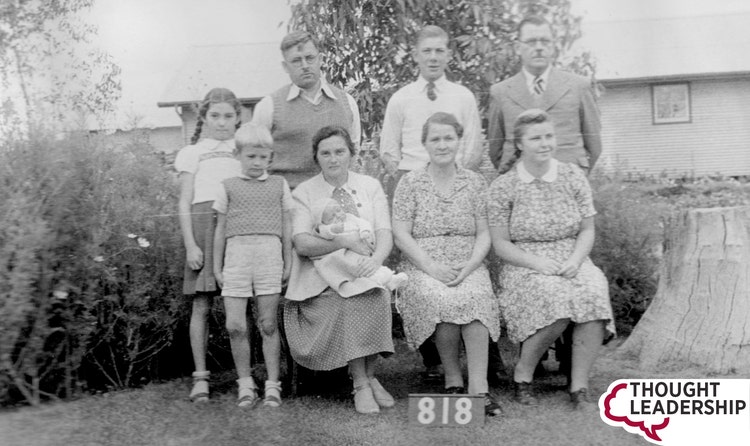
Girschik Collection. Curator: P. Khosronejad © P. Khosronejad
Tatura, Victoria, Australia, 10 March 1945. Family groups of German Internees at No. 3 Camp, Tatura Internment Camp. Back row, left to right (standing): Helga Girschik; Rudolf Girschik; Lothar Streker; Daniel Streker. Front row (sitting): Peter Girschik (standing); Elfriede holding baby Herbert Girschik; Elisabeth Streker; Liselotte Streker.
Biography of Professor Pedram Khosronejad and Mrs Helga (Girschik) Griffin (PDF)
Turtles Rock! Let's Shellebrate - Associate Professor Ricky Spencer: 3 June 2023
As part of Reconciliation Week and in celebration of World Turtle Day, Western Sydney University Library and Associate Professor Ricky Spencer, in partnership with Penrith City Library, present an interactive family workshop on how we can all help protect Australian endangered turtle species, incorporating mindful rock painting activities, following on from turtle-themed Indigenous story time activities led by Pearl Wymarra, Aboriginal Elder.
This event is part of the Growing Thought Leadership Series which aims to promote and celebrate Western Sydney University's work aligned with United Nations Sustainable Development Goals for people of all ages.
Time: 12 noon to 1pm
Location: Penrith City Council
Redrawing the Circular Economy : Organic waste and Peri-urban futures - Dr Stephen Healyeading: 25 July 2023
This talk presents the findings of an Australian Research Council Discovery project called "Innovative Waste Economies: Redrawing the Circular Economy". The circular economy is a policy response to the global waste crisis, aiming to replace the "take-make-waste" economy with a more sustainable model that prolongs product life, reduces waste, and recovers the value of discarded materials. However, achieving circularity requires more than just technical improvements in waste management - it also involves reconfiguring social practices, economic relationships, and ingrained habits.
Our research centres social-practices of experimentation with waste already underway in Australia that are attempting to renegotiate how we live with waste. In this talk, we discuss one such experiment that involves a range of stakeholders working together to organize the reverse logistics of transporting organic waste (specifically, spent coffee grounds) from Sydney city cafes, businesses, and universities to peri-urban farms practicing regenerative farming. Our research aims to explore the social and economic relationships required to make this type of circularity work. The City of Sydney has set the ambitious goal of an 80% reduction of organic waste from landfill by 2030. Meeting this ambitious goal involves rapid and ambitious transformation. What emerges from our research is a more inclusive and participatory vision of circularity, which aims to achieve a wider range of goals beyond simply waste reduction.
Date & time: Tuesday, 25 July 2023, 12:00pm-1:00pm
Location: Western Sydney University, Parramatta City Campus, Peter Shergold Building, Level 9, Conference room 2 (PC-01.9.16).
Western Sydney University design and water researchers Dr Leo Robba and Dr Ian Wright have combined art and science in The Painted River Project, which highlights the importance of preserving and improving river and water catchments in Australia through community engagement and education.
The Painted River endeavours to engage the community through art on the health and future vision for rivers. Water and our river systems are the foundation of healthy cities and human well-being.
Date & time: Friday, 4 August 2023, 1:30pm-2:30pm
Location: Western Sydney University, Parramatta City Campus, Peter Shergold Building, Level 9, Conference room 2 (PC-01.9.16) or Online via Zoom.
https://www.youtube.com/embed/m9QchooBvy4?si=q1AvK2gmkhl5xXbt
There are 4.4 million people living with disability in Australia. That’s 1 in 6 people. The likelihood of disability increases with increasing age. People with disability experience more disadvantage when it comes to participation and employment. This presentation discusses the work of Western Sydney University and the Western Sydney Disability Hub with a focus on two key workforce issues. First, there are not enough workers to meet demand within the disability sector. This is putting a strain on existing services and staff, compromising participation and outcomes for people with disability who want to access therapies and supports in the daily life. Second, people with disability are less likely to be employed. This can cause a cycle of poverty and welfare dependency negatively impacting on outcomes for people with disability. Come and hear from industry professionals and lived experience to see how this issue may be addressed.
Dr Caroline Mills is an occupational therapist and academic in the School of Health Sciences at Western Sydney University. Her work focuses on health and disability and is often co-designed with industry stakeholders and those with lived experience.
Kitty Mach is a provisional psychologist and WSU alumni, with lived experience of autism and ADHD. She brings a unique perspective to her work in the disability sector.
Jeff Scobie is a recognised leader in the disability field with over 40 years experience in the disability sector in various roles. He is currently the CEO of Macarthur Disability Services.
Date & time: Thursday, 31 August 2023, 12:00pm-1:00pm
Location: Western Sydney University, Parramatta City Campus, Peter Shergold Building, Level 9, Conference room 2 (PC-01.9.16) or Online via Zoom.
https://www.youtube.com/embed/OL7T8lOEfQo?si=AuSxw8HGULGWYMHM
Food security is essential for the survival of humankind and is linked to many of the Sustainable Development Goals (SDGs). Each SDG has some connection to other SDGs creating a complex web of interconnected systems. At a fundamental level, these interconnections facilitate the exchange of knowledge, material, services, and money. Smart Computing can facilitate these exchanges to significantly enhance economic, social, and environmental outcomes.
In this seminar, we will show practical applications of Smart Computing to achieve food security by creating Digital Agrifood Ecosystems. Unlike traditional digital agriculture, digital agrifood ecosystems take a holistic approach by integrating various stakeholders in the food system, including farmers, consumers, supply chains, agriculture extension and other service providers, and policymakers. It enhances the flow of information among these stakeholders, enabling them to coordinate activities leading to improved productivity, distribution, quality, and food availability, focusing on achieving food security. These ecosystems leverage advances in digital technologies, social computing, inferencing, predictive, and generative computational techniques to create necessary information flows to facilitate the timely and context-specific exchange of knowledge, material (inputs and harvest), and money. We will present some case studies of application of these innovations in agriculture practices in Sri Lanka, India, and Africa.
Professor Athula Ginige holds a B.Sc. first-class honours in Mechanical Engineering from the University of Moratuwa, Sri Lanka. He completed his PhD at the University of Cambridge on a Cambridge Commonwealth Scholarship. Formerly an Associate Professor at the University of Technology, Sydney (UTS), he is currently the Head of School and Professor of Information Technology at Western Sydney University. His research interests include Web Engineering and remote healthcare. He serves as the Editor-in-Chief of the International Journal on Advances in ICT for Emerging Regions (ICTer).
Dr. Bahman Javadi Jahantigh is an Associate Professor in Networking and Cloud Computing at Western Sydney University. He holds MS and PhD degrees in Computer Engineering from the Amirkabir University of Technology. Prior to his current role, he was a Research Fellow at the University of Melbourne and INRIA Rhone-Alpes, France. He is the co-founder of the Failure Trace Archive and has served on various international program committees.
Dr. Ashini Wesumperuma is an Information Technology Lecturer at Western Sydney University, specializing in eLearning Design and Development. She is keen on incorporating sustainability into teaching.
Date & time: Thursday 7th September 2023, 12:00pm-1:00pm
Location: Western Sydney University, Parramatta City Campus, Peter Shergold Building, Level 9, Conference room 2 (PC-01.9.16) or Online via Zoom.
Bookings for this hybrid event are essential
https://www.youtube.com/embed/emgN5xt0MOo?si=fhL8nNfj0jWBnAeZ
Why do countries torn by civil war rarely emerge as robust democracies with sustainable peace?
Join the conversation on the International Day of Peace as former UN Peacekeeper Dr Izabela Pereira Watts discusses her new book Peace or Democracy: Dilemmas for Peacebuilding after Civil Wars and her professional and practical experiences, with special guest Leanne Smith, Chief Executive Officer of the Australian Human Rights Commission, and Dr Simon Longstaff, AO (CEO of The Ethics Centre) as part of the Library's Thought Leadership series.
Dr Izabela Pereira Watts accumulates more than 15 years of experience in development cooperation projects with major international organizations, such as the United Nations and the Organisation of American States, as well as private and public sectors, including think tanks, the Brazilian Ministry of Foreign Affairs and the Peruvian Embassy. Her experience in international development across Asia, Latin America, Africa and Europe intersects with public policy design, project management, monitoring and evaluation, peacekeeping, elections, humanitarian affairs, strategic analysis and gender in fragile states. She is a former UN Peacekeeper (Democratic Governance Officer to the United Nations Mission in Timor-Leste). She holds a Doctorate in International Relations and two master's degrees in Economics and Political Sciences and Peace Studies, respectively. Her bachelor's degree was also in International Relations.
Her passion and energy led her to multiple awards, including, “Top 99 Under 33 Most Influential International Leaders” by the global affairs magazine Diplomatic Courier (USA-2013) and the Yunque Prize for Humanitarianism and Education (Argentina-2007). She was also nominated twice for the Outstanding Contribution for Teaching and Learning Award (OCTAL-University of Wollongong- 2020 & 2022). Dr Pereira Watts is a senior international consultant and lecturer at the University of Wollongong and Western Sydney University. She is a research member of the Future of Rights Centre (FoRC) at the University of Wollongong and an Adjunct Fellow for the Humanitarian and Development Research Initiative (HADRI) at Western Sydney University. She is also a former Ambassador for the Global Peace Index of the Institute of Economics and Peace (IEP) and a former research coordinator of Armed Conflict Prevention and Resolution–(GapCON University Rio de Janeiro). Dr Pereira Watts has many publications, including the book Peace or Democracy: Dilemmas for Peacebuilding after Civil Wars (2023 Routledge- UK) the foreword of which was written by Nobel Peace Laureate Jose Ramos-Horta, and endorsed by former members of the Parliament of Kosovo and Rwanda and UN high Officials. Dr Pereira Watts’ excellent communication skills are also evident in her fluency in English, French, Spanish and Portuguese.
Date & time: Thursday, 21st September 2023, 1:30pm-2:30pm
Location: Western Sydney University, Parramatta City Campus, Peter Shergold Building, Level 9, Conference room 2 (PC-01.9.16) or Online via Zoom.
https://www.youtube.com/embed/WZDywk94q7I?si=Su44pmanAr89E732
Why should we aim to empower our students to work and think globally, implementing strategies to end poverty, improve health and education, reduce inequality, and spur economic growth – all while tackling climate change and working to preserve our oceans and forests?
This year the Intergovernmental Panel on Climate Change (IPCC) published a synthesis report summarising the state of knowledge of climate change, its widespread impacts and risks, and climate change mitigation and adaptation. The message is clear: the windows of opportunity for climate resilient development are narrowing and education has a role to play towards creating a more informed society in terms of consumption and lifestyle. This presentation will touch on specific points of the IPCC Report relating to the understanding of causality and impact, and how this can inform and educate responses focused on adaptation to climate change.
Join us to hear Professor Graciela Metternicht discuss the importance of learning design to teach sustainable development, and why and how we can meaningfully teach skills students can apply in their future professions, making a tangible difference to our world.
Graciela Metternicht is the Dean of Science at Western Sydney University. She is a Professor of Geography with over 25 years of experience in environmental management, sustainability and the science-policy interface. Her research interests are primarily in environmental geography, with a focus on geospatial technologies and their application in environmental management and policy (sustainable land management, terrestrial ecosystems) and the UN Sustainable Development Goals. Graciela is a Scientific and Technical Adviser on ecosystem restoration and sustainable land management for the Global Environment Facility (GEF); Chair of the NSW Biodiversity Conservation Advisory Panel; member of the IUCN Commission on Ecosystem Management; member of Future Earth Global Land Program Scientific Steering Committee. She is also an Adjunct Professor of Environmental Geography at the Earth and Sustainability Science Research Centre, UNSW Sydney.
Date & time: Wednesday 25th October 2023, 12:00pm-1:00pm
Location: Western Sydney University, Parramatta City Campus, Peter Shergold Building, Level 9, Conference room 2 (PC-01.9.16) or Online via Zoom.
https://www.youtube.com/embed/szg6mG3Tz58?si=wKobOQmckqIincWG
Global food systems are failing children and adolescents. Poor diet quality is driving malnutrition among adolescents around the world. The quality of food eaten by adolescents not only determines their health and development but is also the foundation of thriving communities. With 1.3 billion adolescents (10-19 years), forming 16 percent of the world’s population (UNICEF Data 2023), investment in the transition from childhood to adulthood during this critical period of growth is crucial.
To develop a truly child-centred food system, we need to understand how children navigate their food environments, deciding what to eat, where to eat, and where to buy it. To do this we used a novel distributed data generation method to consult with 1,300 children and adolescents from over 30 countries to document their needs, experiences and aspirations in relation to nutrition, food environments and food systems. We published two companion reports to UNICEF’s State of the World’s Children 2019 report and a seminal report on how young people engage with their food systems globally.
This presentation will showcase what young people told us about a range of barriers which impact their ability to consume foods that are healthy, nutritious, and sustainable. We will also highlight how children and young people want to be engaged in the food system transformation.
Join us to hear recommendations from children and adolescents across the world and what they identified as urgent actions needed to transform food systems and reduce the negative impact on young people and their environment.
Dr Catharine Fleming is a Lecturer in Public Health in the School Health Science, Western Sydney University and is Stream Co-Lead for Youth Participation and Engagement in the Young and Resilient Research Centre. Dr Fleming has a PhD in paediatric nutrition and dietetics and over 15 years’ experience in paediatric nutrition relating to infant and young child feeding, paediatric food allergy and childhood obesity. Dr Fleming has research experience in mixed methods, co design, clinical and public health research methodologies covering quantitative, qualitative and data linkage studies. This experience has involved working with families, children and population-based data in paediatric nutrition in a variety of clinical, community and global settings. Dr Fleming is building a body of work focusing on protecting against lifelong chronic disease through investigating different aspects of feeding and diet in the most teachable moments of childhood and adolescence. Dr Fleming is passionate about ensuring a sustainable nutritional change occurs for children and adolescents through co-designed and development of interventions and policies by young people for young people.
Date and Time: Wednesday 8th November, 2023, 12 noon to 1pm
Location: Western Sydney University, Parramatta City Campus, Peter Shergold Building, Level 9, Conference room 2 (PC-01.9.16) or online via Zoom.
https://www.youtube.com/embed/KiRe8IGO2iA?si=aLn-Plg0UeLMoceJ
Dr. Roger Attwater discussed operational sustainability at Western Sydney University, and invited discussion from the audience.
WSU’s commitment to the UN-led ‘Race to Zero for Colleges and Universities’ is for Carbon Neutral 2023 and Climate Positive 2029.
The presentation outlined our journey during 2022 towards Climate Active accreditation of carbon neutrality, and our developing Carbon Transition Plan to progress towards being a low carbon organisation and our Climate Positive aspirations.
Associate Professor Louise Crabtree-Hayes and Associate Professor Neil Perry discussed regional collaboration and invited discussion from the audience.
In 2021 after two years of closure, the University's Lithgow building re-opened as Maldhan Ngurr Ngurra - the Lithgow Transformation Hub. The name translates as 'working together, side by side'.
The name was provided by Wiradjuri language holder Sharon Riley to uphold the vision developed by local stakeholders, which is for Maldhan Ngurr Ngurra to act as a catalyst for regional collaboration towards sustainable futures.
Framed by the UN Sustainable Development Goals, Maldhan Ngurr Ngurra is now a thriving centre of regional innovation with a program of intertwined capacity-building activities that continues to expand and deepen.